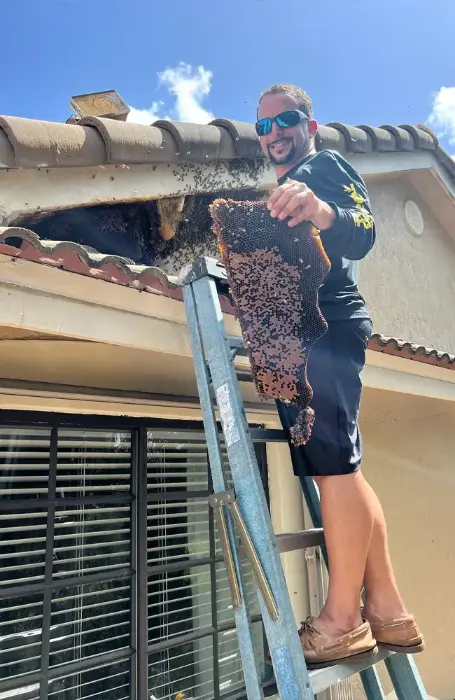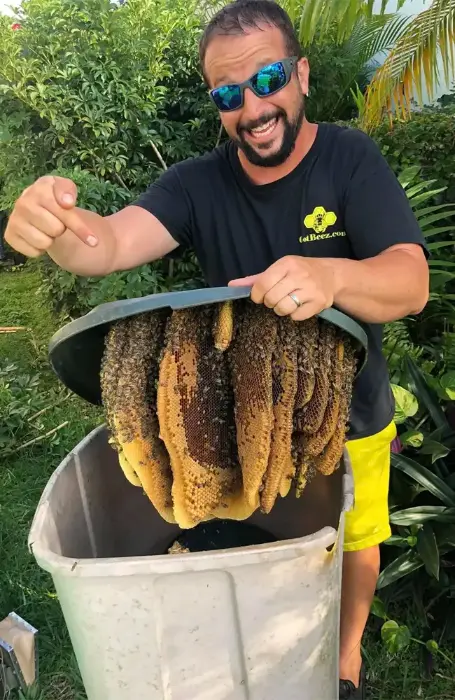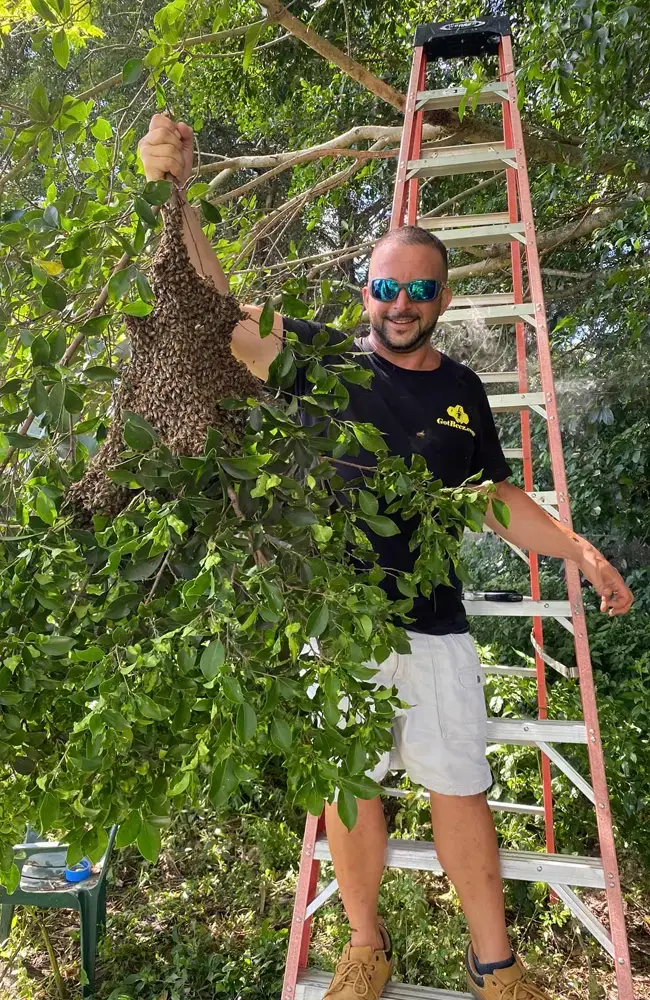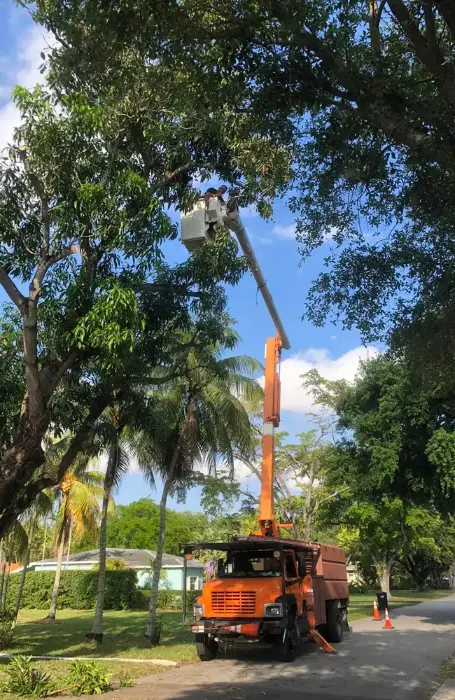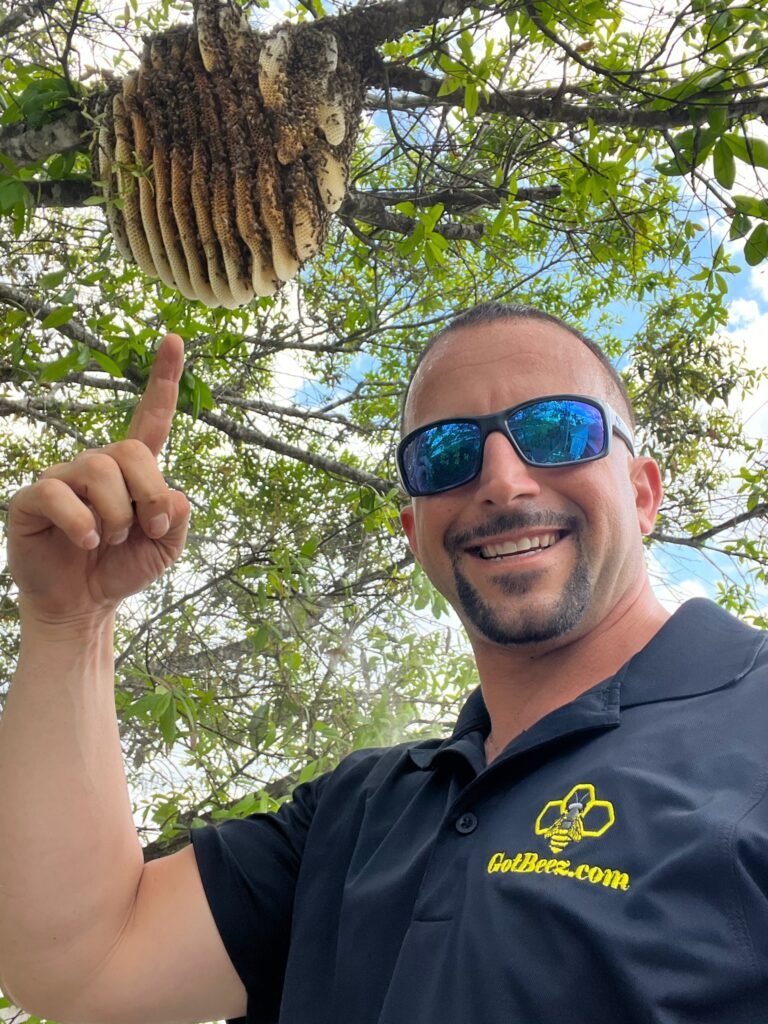
- Inspect the bee activity. We locate the entry point and determine whether it is a swarm or an established hive.
- Protect the home. We work carefully around stucco, rooflines, landscaping, patios, pool areas, and interior walls.
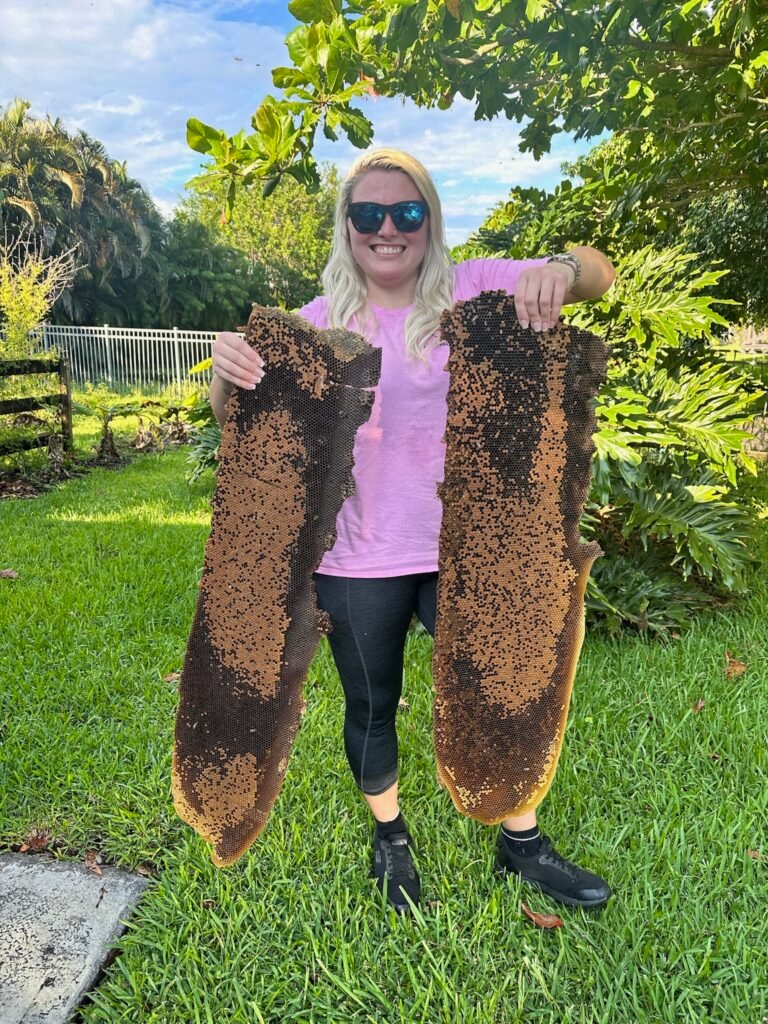
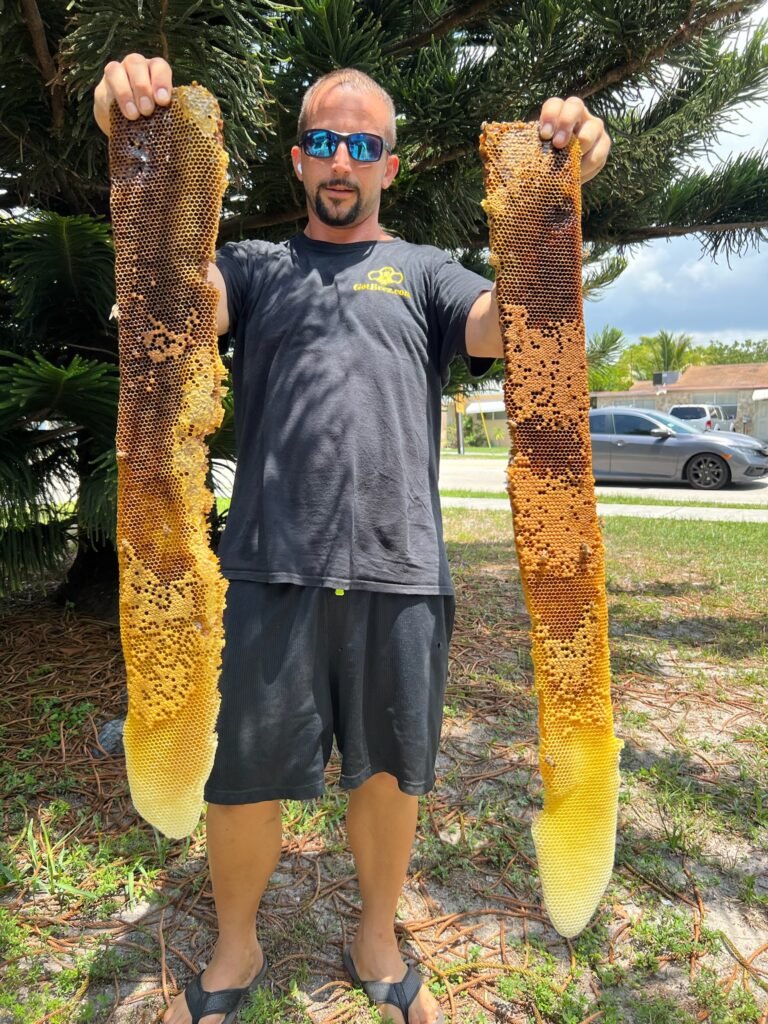
- Remove bees and honeycomb. If the hive is inside the structure, comb removal matters because leftover honeycomb can attract pests and repeat bee activity.
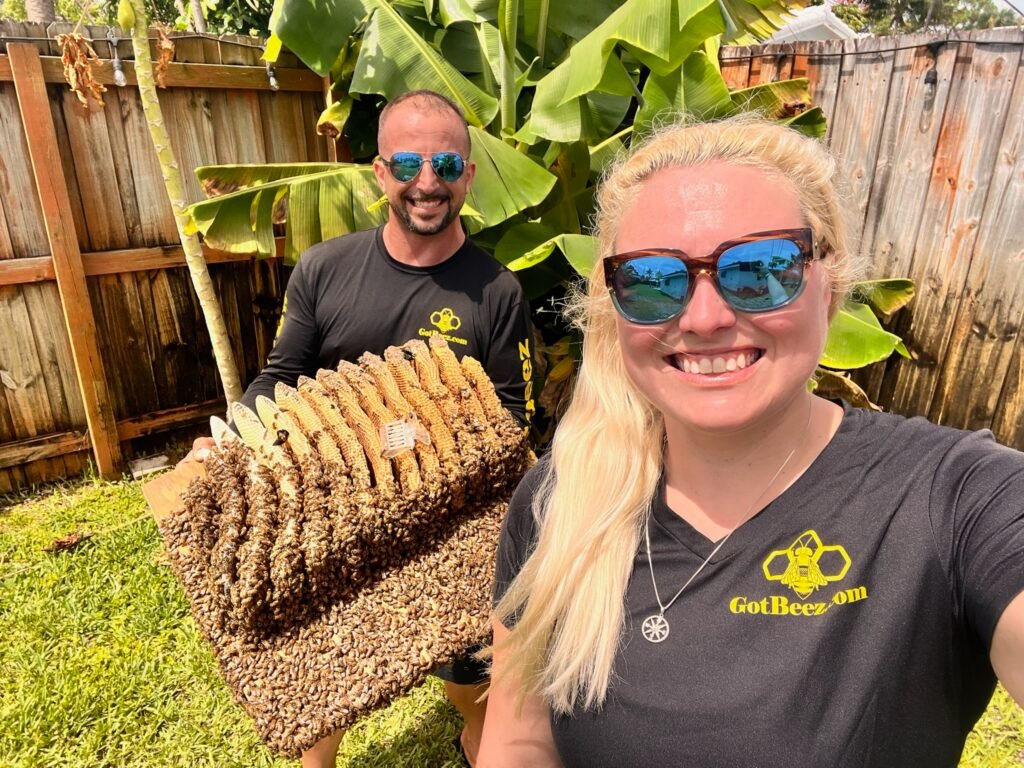
- Save the queen when possible. A successful live relocation is much better when the queen is safely moved with the colony.
- Relocate the bees. We move live colonies to our apiary whenever the situation allows it.
- Explain prevention. After removal, we show you what should be sealed or repaired so bees are less likely to return.
Residential bee removal vs extermination
Extermination may stop visible bee activity, but it does not always solve the homeowner problem. If a hive is inside a wall, roofline, attic, or soffit, dead bees and abandoned honeycomb can create odor, leaks, ants, roaches, wax moths, and future infestations.
Live residential bee removal is more careful. We remove the bees, address the comb when needed, and relocate the colony instead of killing it.