
Emergency Bee Removal in Broward & Palm Beach County: 24/7 Live Bee Relocation
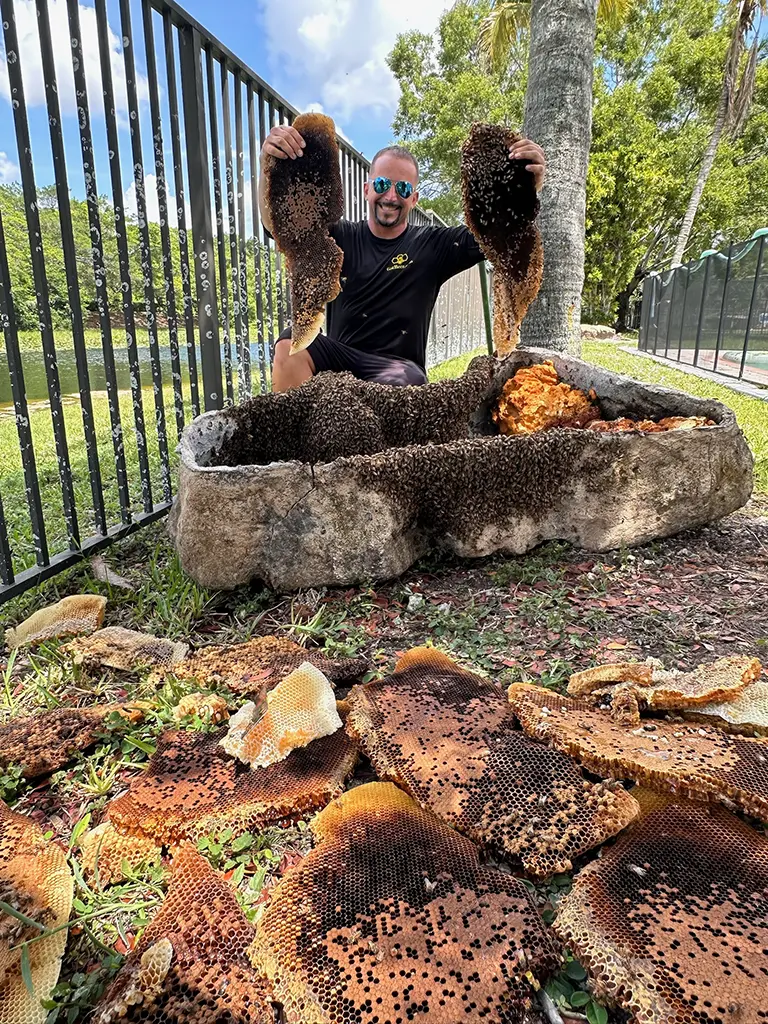
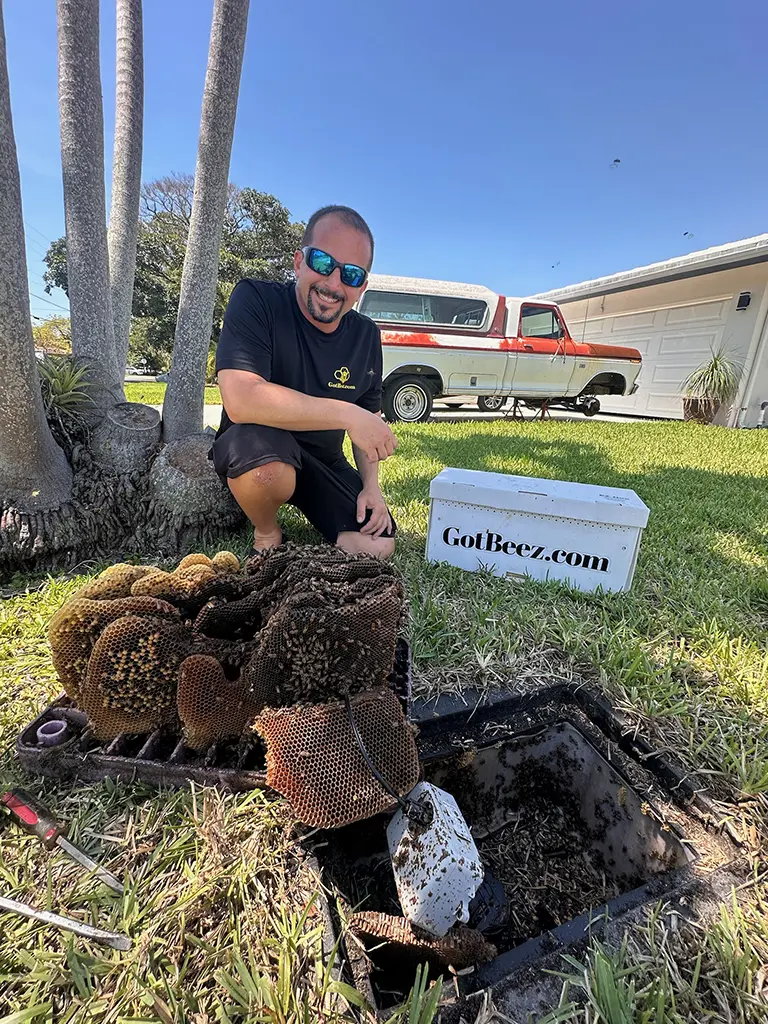
24/7 Emergency Bee Removal Emergency Bee Removal in Broward & Palm Beach County When bees show up where people live, work, or walk, waiting is not always an option. GotBeez provides same-day and 24/7 emergency live bee removal across Broward County and Palm Beach County — with no-kill relocation, every time. Call 954-546-0220 (Broward) or 561-867-0507 (Palm Beach) for the fastest help. I am Nick with GotBeez. When someone calls us for an emergency, they are usually not asking a casual question — bees are near a doorway, kids are scared, a customer cannot enter a business, or a hive is getting more aggressive by the hour. My first job is to figure out whether this is a true emergency, how fast we need to respond, and what can be done safely before we arrive. When bee removal is an emergency Not every swarm is an emergency, but these situations usually need same-day or immediate attention: Bees blocking an entrance to a home, school, store, restaurant, office, or rental unit Bees inside living or work areas, especially near kitchens, bedrooms, or customer zones Aggressive or defensive behavior near sidewalks, pool decks, playgrounds, or parking areas Established hives in walls, soffits, fascia, or rooflines with heavy flight activity Commercial shutdown risk when bees threaten employees, guests, tenants, or deliveries Allergy or sting-risk concerns when someone on site is highly sensitive to bee stings If someone is having a serious allergic reaction, call 911 first. Bee removal comes after immediate medical emergencies are handled. What to do in the first 30 minutes Keep people and pets away from the bee activity. Do not stand under the flight path. Do not spray the bees — especially if they are in a wall or roof void. Read why spraying bees in a wall makes the problem worse. Do not seal the entry hole. Trapped bees often move deeper into the structure or find a way indoors. Take a short video from a safe distance showing where bees are entering and how active they are. Call or text GotBeez with your city, photos, and whether anyone has been stung. We can often quote and schedule faster with good photos. How GotBeez handles emergency bee removal 1. Fast triage We ask where the bees are, how long they have been there, whether anyone has been stung, and whether the hive is in a wall, tree, roof, meter box, or open area. 2. Same-day scheduling Many emergency calls in Broward and Palm Beach County can be scheduled the same day depending on location, access, and crew availability. 3. Live removal first We remove bees alive and relocate the colony instead of spraying and leaving comb behind. 4. Honeycomb cleanup If bees were in a structure, honeycomb removal may be needed to prevent odor, pests, and repeat infestations. For full service details, see our 24/7 emergency live bee removal page. Where we respond for emergency bee removal GotBeez is based in Davie and serves all of Broward County and Palm Beach County. Common emergency response areas include: Davie and Southwest Ranches Fort Lauderdale Coral Springs Hollywood Boca Raton West Palm Beach Lake Worth See all communities on our service areas page or contact us if you are unsure whether your address is in range. Emergency bee removal cost in South Florida Most emergency live bee removal jobs range from $150 to $800+ depending on hive size, height, access, whether bees are in a wall, and how urgent the response needs to be. Structural hives that require opening walls or soffits can cost more because of labor, access equipment, and wall bee removal complexity. Free quote tip: Send photos or a short video before we arrive. It helps us bring the right tools and give you a clearer price range faster. Related GotBeez services 24/7 Emergency Bee Removal Our main emergency service page for Broward and Palm Beach County. Live Bee Removal No-kill removal and humane relocation for swarms and established hives. Residential Bee Removal Homeowner-focused help for walls, attics, rooflines, patios, and yards. Commercial Bee Removal Restaurants, warehouses, offices, apartments, and customer-facing properties. Emergency bee removal FAQ Do you offer 24/7 emergency bee removal? Yes. GotBeez offers same-day and 24/7 emergency bee removal across Broward County and Palm Beach County when scheduling allows. How fast can you come for an emergency? Many calls can be handled the same day. Response time depends on your location, crew availability, and job complexity. Photos help us move faster. Is emergency bee removal more expensive? It can be, especially after hours or when access is difficult. Most jobs still fall in the $150 to $800+ range depending on the situation. Should I spray bees before you arrive? No. Spraying often makes structural hives worse and can leave honeycomb, odor, and pests behind. Live removal and proper cleanup are usually the better fix. Do you remove bees from walls during emergencies? Yes. We handle structural bee removal from walls, soffits, fascia, rooflines, and other hidden voids, every time. What counties do you cover? Broward County and Palm Beach County, including Davie, Fort Lauderdale, Coral Springs, Hollywood, Boca Raton, West Palm Beach, and Lake Worth. Do you kill bees during emergency removal? GotBeez specializes in live bee removal and relocation. Extermination is not our preferred approach when a live removal is possible. What number should I call? Call 954-546-0220 for Broward County or 561-867-0507 for Palm Beach County. Need emergency bee removal now? Call or text GotBeez for same-day and 24/7 help in Broward and Palm Beach County. Broward: 954-546-0220 | Palm Beach: 561-867-0507 View emergency bee removal service details
Why Spraying Bees in a Wall Makes the Problem Worse in South Florida
Spraying bees in a wall can leave honeycomb, dead bees, odor, pests, leaks, and repeat bee activity behind. Learn what to do instead from GotBeez.
Massive Bee Hive Hidden in Pallet
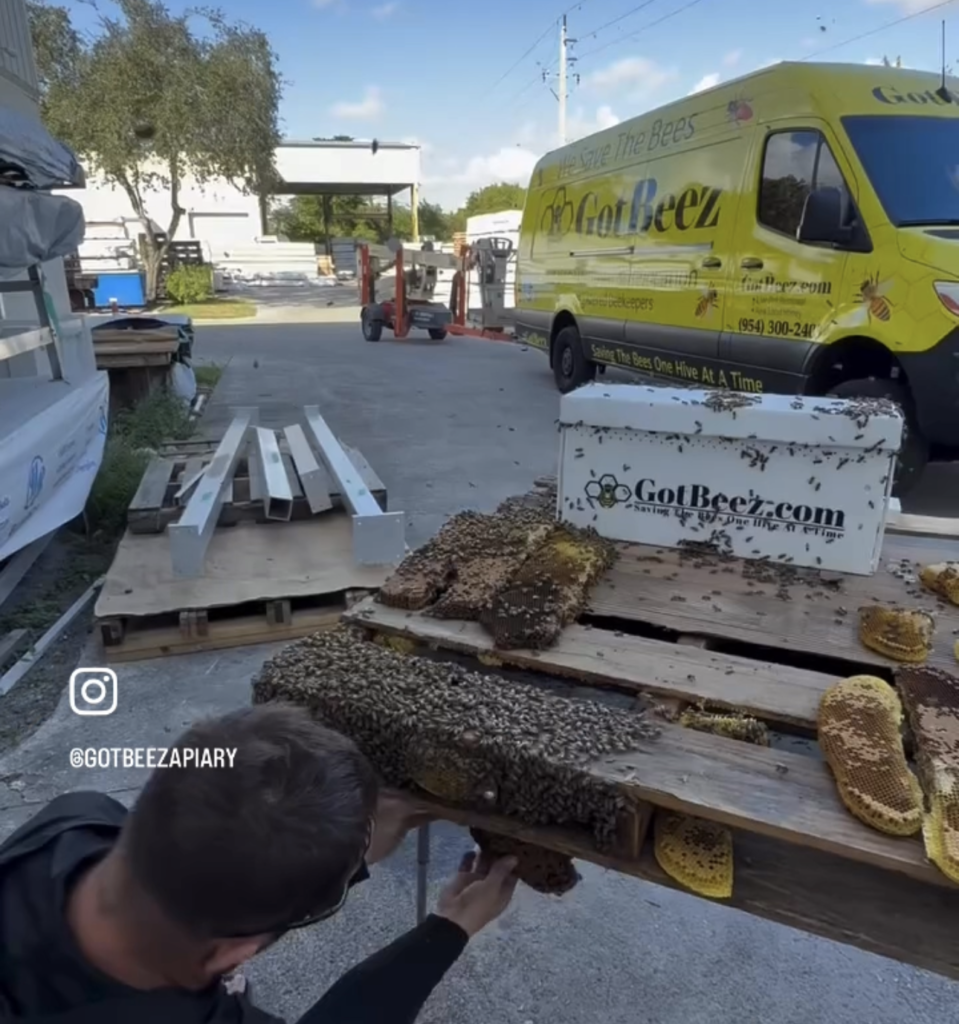
Pompano Beach Commercial Bee Removal Bee Removal in Pompano Beach, FL – Massive Hive Hidden in Pallet A full honey bee colony was discovered deep inside a commercial pallet in Pompano Beach, creating a safety issue for workers and disrupting operations. Summary: GotBeez performed a commercial live bee removal in Pompano Beach, Florida after workers discovered heavy bee activity around a pallet. Once opened, the pallet revealed a full active hive with comb built deep inside. Our team safely removed the bees, located the queen, relocated the colony to our GotBeez apiary, cleared the pallet area, and helped the business continue operations safely. Broward: 954-546-0220 Pompano Beach Bee Removal Watch Live Removals Massive Hive Hidden Inside a Pallet What looked like another pallet in a commercial area was actually home to thousands of bees and fresh comb. Watch This Pompano Beach Pallet Hive Removal This pallet was buzzing for a reason. Watch how GotBeez safely opened the pallet, removed the hidden hive, and relocated the colony from this commercial bee removal job in Pompano Beach, Florida. This Pallet Was Buzzing for a Reason This pallet was BUZZING for a reason. GotBeez was called out to a bee removal job in Pompano Beach and quickly discovered that the noise was not coming from forklifts, warehouse movement, or nearby traffic. It was coming from a full honey bee colony living deep inside a pallet. What looked like just another stack in a commercial area was actually home to thousands of bees. Hidden hives like this happen more often than people think, especially in busy commercial and industrial spaces where pallets, equipment, containers, and material stacks may sit undisturbed long enough for bees to move in. A Full Colony Hidden Inside a Commercial Pallet From the outside, the pallet did not look like much. But workers noticed unusual bee activity around one section and called GotBeez to inspect the situation. As we got closer, the buzzing grew louder. The pallet had become prime real estate for a swarm because it offered exactly what bees look for: Tight gaps and protected spaces between boards Shade and shelter from weather A low-traffic interior area where bees could build unnoticed at first Protection from wind, rain, and direct disturbance Once we opened the pallet, we found a huge hive tucked inside, with comb built deep into the interior spaces. This was not a small passing swarm. It was a full, active colony. For the business, that created several immediate concerns: A safety concern for anyone working near the pallet The risk of stings for staff, drivers, vendors, or visitors Disruption to normal operations in that part of the facility The possibility of the colony expanding if left alone For the bees, it meant they had accidentally chosen a high-traffic, human-heavy environment that was not safe long-term. How We Safely Removed and Relocated the Bees Our job at GotBeez is simple but important: safely remove the hive, protect the colony, every time, and relocate the bees to a place where they can continue pollinating without causing problems for people. On this Pompano Beach commercial bee removal job, we: Carefully opened up the pallet to access the hive without creating chaos on site Located the comb and removed sections methodically, keeping the colony together as much as possible Found and secured the queen, which is critical for successful relocation Transferred the bees into our transport equipment Relocated the colony to our GotBeez apiary, where they could settle into a proper hive Cleared the pallet area so workers could get back to normal operations safely Once the bees were removed and relocated, the business was able to resume work around that pallet without worrying about stings, liability, or an active hive in the work area. Why Businesses Need Professional Bee Removal When bees show up at a commercial or industrial site, it is not just an inconvenience. It becomes a safety, liability, and operations concern. Professional live bee removal helps businesses: Keep staff, customers, vendors, and visitors safer Prevent employees from attempting risky DIY removal Minimize disruption to normal operations Protect bees by relocating them instead of exterminating them, every time Reduce the chance of repeat swarm activity by removing comb and hive material Every safe removal helps keep South Florida businesses running smoothly, and every live rescue helps protect the bees that help feed our planet. Related resources: Broward County Bee Removal Bee Swarm vs. Established Hive Bee Removal Cost in South Florida Emergency Bee Removal How to Get Rid of Bees Safely Commercial Bee Removal in Pompano Beach & Broward County GotBeez provides commercial and residential live bee removal throughout Pompano Beach and the rest of Broward County. Whether bees have moved into pallets, warehouses, loading docks, signage, rooflines, equipment yards, storage areas, or building structures, we can help. Live bee removal and relocation to our GotBeez apiary Structural and non-structural hive removals Safe solutions for warehouses, commercial properties, and job sites Hive removal from pallets, equipment, containers, and material stacks Support for property managers, business owners, and operations teams If you hear buzzing around a pallet or find bees in a place they do not belong, do not ignore it and do not spray it. Reach out to a professional team that can protect your people and the bees. Learn more about our local service area here: Bee Removal in Pompano Beach, FL – GotBeez Common Commercial Hive Locations Pallets and pallet stacks Warehouses Loading docks Shipping containers Equipment yards Material storage areas Signage and awnings Rooflines and soffits Call GotBeez Broward County: 954-546-0220 Palm Beach County: 561-867-0507 Watch Real Removals See live bee removals, swarm captures, wall hives, commercial hives, pallet removals, and relocation work on YouTube. youtube.com/@GotBeez Have Bees Around Pallets, Equipment, or a Commercial Work Area? Do not risk employee safety or disrupt operations. GotBeez provides humane commercial bee removal and relocation throughout Pompano Beach and Broward County. Broward: 954-546-0220 Pompano Beach Bee Removal Request Bee Removal Pompano Beach Commercial Bee Removal
Davie Outdoor TV Hive Removal
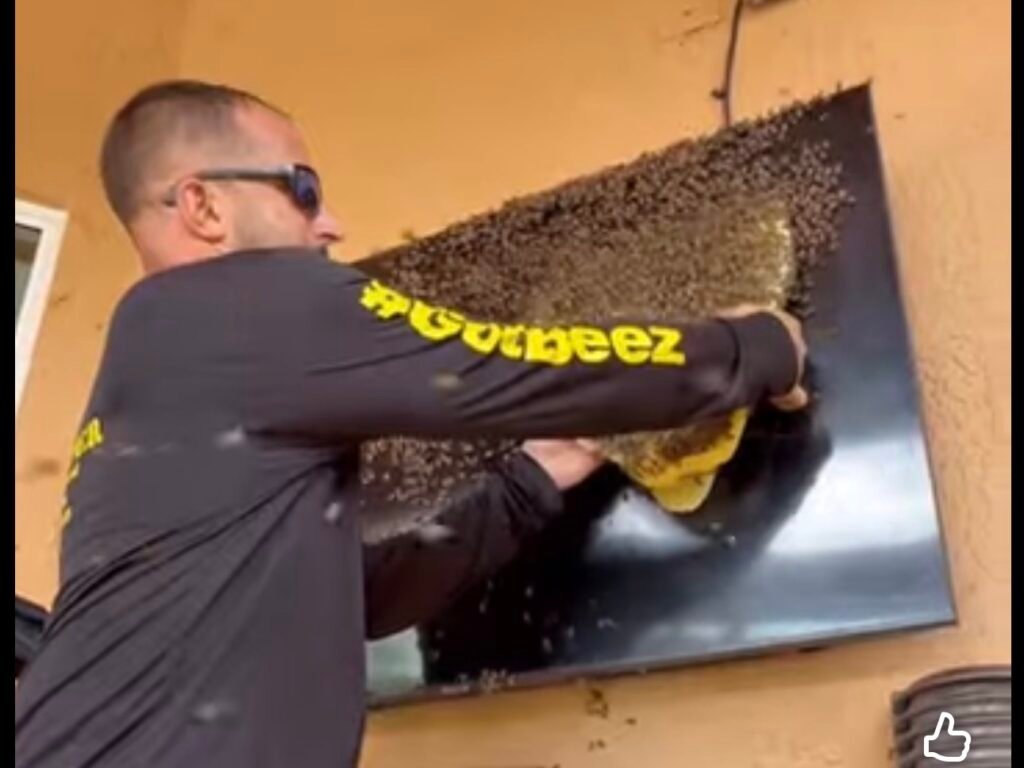
Davie Outdoor TV Hive Removal Bee Removal in Davie, FL – Massive Hive on Outdoor TV Screen A massive honey bee colony built directly on an outdoor television screen cover at a home in Imagination Farms, Davie, Florida. Summary: GotBeez performed a live bee removal at a home in the Imagination Farms community of Davie, Florida after a large colony established itself directly on an outdoor TV screen cover near the family’s pool area. The hive contained thousands of bees and fresh comb attached to the cover. Our team safely removed the bees, located the queen, relocated the colony to our apiary, removed the comb, cleaned the area, and restored the family’s ability to enjoy their outdoor living space. Broward: 954-546-0220 Davie Bee Removal Watch Live Removals Massive Hive on an Outdoor TV Screen This Imagination Farms colony built directly on an outdoor television cover near the family’s pool area before being safely removed and relocated by GotBeez. Watch This Davie Outdoor TV Hive Removal A huge colony decided an outdoor TV screen cover was the perfect place to build a hive. Watch how GotBeez safely removed and relocated the bees from this Imagination Farms home in Davie, Florida. Bees on Your TV? It Can Happen Removing bees from an outdoor TV screen cover? That is exactly what happened at a home in Davie, Florida. This was another un-BEE-lievable location for a hive, and it is a perfect reminder that bees can choose just about anywhere to move in. Most people expect bees to show up in trees, soffits, fascia boards, or wall cavities, not directly on their television. But for honey bees, an outdoor TV cover is simply another protected surface in a sheltered environment. The homeowners at Imagination Farms noticed a lot of bee activity around the pool area and quickly realized something was not right. When they looked closer, they saw that the hive was right on the TV screen cover, with bees covering the surface and comb forming underneath. In South Florida, where warm weather and flowering plants are around most of the year, swarms are always looking for convenient new homes. Outdoor living spaces, especially covered patios and pool decks, can become surprise hive locations. A Full Hive on an Outdoor Screen in Imagination Farms By the time GotBeez arrived in Davie, the hive was already well established. Bees were clustered across the TV screen cover Fresh comb was visible on the surface The colony had grown large enough to make the entire area uncomfortable to use The family had stopped using the outdoor TV and pool area until the bees were removed For this family, that meant giving up part of their outdoor living space until the colony was safely handled. They did the right thing by not trying to spray, knock down, or disturb the hive themselves. Instead, they called in a professional live bee removal company that could safely remove the bees and relocate the colony. How We Safely Removed and Relocated the Bees At GotBeez, we always focus on live bee removal and relocation, every time. Bees are essential pollinators, and our job is to solve the problem for the homeowner while still protecting the colony. Here is how we handled this Davie, FL outdoor TV hive: Carefully inspected the outdoor area and TV screen cover to understand how the bees were clustered and where the comb was attached Gently removed the bees from the screen cover, working slowly to avoid agitating the colony Removed comb from the TV cover and surrounding area so the hive would not rebuild in the same spot Located and secured the queen, which is crucial for successful relocation Transferred the bees to transport equipment and moved them safely to our local apiary Cleaned the area so honey, wax, and scent were not left behind to attract another swarm Once the bees were removed and relocated, the homeowner could use their outdoor pool area and TV again without worrying about thousands of bees sharing the space. Why Live Bee Removal Matters in Davie, FL Davie and the surrounding Broward County area are full of horse properties, large yards, mature landscaping, barns, patios, and outdoor living spaces like the homes in Imagination Farms. That means there are many places where bees may decide to build, including: Patios and outdoor kitchens Pool decks and screen enclosures Outdoor TVs and entertainment areas Barns and horse property structures Fences, pergolas, and gazebos Soffits, fascia boards, and rooflines Live bee removal protects both people and pollinators. Instead of killing the bees on your property, GotBeez relocates every colony to our apiary, where they can continue to pollinate and produce honey in a managed environment. Related resources: Bee Removal in Davie, FL Broward County Bee Removal Bee Swarm vs. Established Hive What Happens If You Leave a Beehive in Your Wall? How to Get Rid of Bees Safely Africanized Bees in South Florida Need Bee Removal in Davie or Broward County? If you have discovered unusual bee activity around your outdoor TV, pool area, patio, barn, fence, pergola, or any other part of your property in Davie, do not ignore it. A small cluster can quickly turn into a large hive. GotBeez provides safe, humane bee removal in Davie, FL and across Broward County. Outdoor TV hive removal Pool area bee removal Patio and pergola hive removal Barn and horse property bee removal Fence, shed, and outdoor structure hive removal Live bee relocation to our local apiary Learn more about our local services here: Bee Removal in Davie, FL – GotBeez Common Outdoor Hive Locations Outdoor TVs Pool equipment Covered patios Outdoor kitchens Pergolas and gazebos Barns and sheds Fences and posts Soffits and fascia boards Call GotBeez Broward County: 954-546-0220 Palm Beach County: 561-867-0507 Watch Real Removals See live bee removals, swarm captures, wall hives, outdoor hives, and relocation work on YouTube. youtube.com/@GotBeez Have Bees Around Your Patio, Pool Area, or Outdoor TV? Do not wait for a small bee
Single Island Facia Bee Removal
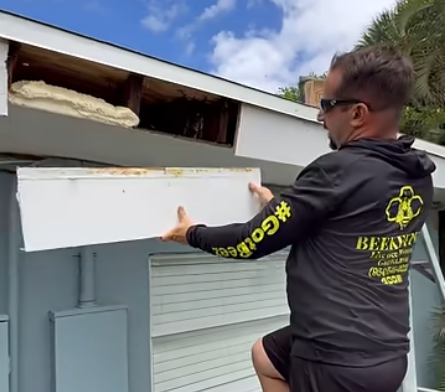
Singer Island Fascia Hive Removal Hidden Bee Hive in Fascia on Singer Island, FL – Live Removal & Relocation A few bees near the roofline turned into a massive fresh hive hidden inside the fascia of a Singer Island home. Summary: GotBeez removed a hidden honey bee colony from the fascia of a home on Singer Island, FL after the homeowner noticed only light bee activity near the roofline. Once the fascia was opened, our team found a large fresh hive with new comb and thousands of bees. The queen and colony were safely relocated to our local apiary, the comb was removed, and the cavity was cleaned to help prevent future infestations. Palm Beach: 561-867-0507 Singer Island Bee Removal Watch Live Removals Hidden Fascia Hive Removed Live GotBeez safely removed the comb, located the queen, and relocated the colony to our local apiary. ★★★★★ “Got Beez did an incredible job handling our bee infestation. They responded the next day, safely relocated the queen and thousands of bees, and handled a tough-to-reach hive with total professionalism. They patched the soffit perfectly. Before leaving they offered us some helpful ways to prevent the bees from returning and answered all of our questions. They even gave our son honeycomb and a jar of their honey. Really nice people, reliable, and followed through with everything they said. Highly recommend — caring, efficient, and really great to work with.” — Maggie View Original Google Review A “Small” Bee Problem Hiding in the Fascia You’d walk right past this Singer Island home and never know anything was wrong. From the ground, it looked like just a few bees coming and going near the fascia. There was no obvious hanging swarm, no exposed comb, and no large visible hive. Inside that fascia, though, a full colony was already living rent-free inside the structure. This is exactly how it starts for many homeowners. A little bee activity near the roofline quietly turns into thousands of bees and a large hive before anyone realizes how big the problem really is. Fascia boards are one of the most common places for bees to move in because they offer shelter, small entry points, and protection from weather. In coastal areas like Singer Island, warm conditions allow colonies to grow quickly once they find a protected cavity. What We Found Inside the Fascia Once we carefully opened the fascia, the real story showed up fast. Behind a small exterior opening, there was a fresh but massive hive with new comb and a full colony already established. The bees had turned the narrow fascia cavity into a functioning hive with thousands of bees. Even though this was a newer hive, it had grown quickly. Warm South Florida weather, year-round forage, and plenty of nectar sources around Singer Island make it easy for colonies to expand in a short amount of time. Why this matters What looks like “a few bees” from the outside can mean a full hive, comb, honey, brood, and queen inside the structure. Early inspection helps keep the removal smaller, safer, and less expensive. Our Live Bee Removal and Relocation Process At GotBeez, we do not just spray and seal. We perform live bee removal and relocate every colony to our local apiary, every time. For this Singer Island fascia job, our process included: Carefully opening the fascia to access the hive with minimal damage to the home Gently removing the comb and bees from inside the fascia cavity Locating and securing the queen so the colony could stay together Safely transferring the bees for relocation to our apiary Cleaning the area to remove leftover wax, honey, and scent Advising the homeowner on sealing and repairs to help prevent bees from moving back in The result: the homeowner’s fascia was cleared, the hive was removed, and the bees were given a new home where they can continue pollinating and producing honey instead of causing damage inside a house. Why Hidden Hives Are So Common on Singer Island Singer Island is a beautiful barrier island, but its warm climate and coastal environment make it a strong place for honey bees to thrive. Gaps in fascia, soffits, vents, and rooflines can all become perfect entry points for a swarm looking for a new home. Most homeowners only see: A handful of bees at first Occasional activity near a small crack or gap A little buzzing near a corner of the roof Bees entering and exiting the same small opening By the time the hive is large enough to be obvious from the outside, there can already be a lot of comb, honey, and bees inside the structure. That is why early inspection and professional live bee removal is so important. Related guides: Bee Swarm vs. Established Hive What Happens If You Leave a Beehive in Your Wall? Bee Removal Cost in South Florida How to Get Rid of Bees Safely Need Bee Removal in Singer Island, FL? GotBeez provides safe, humane live bee removal on Singer Island and throughout Palm Beach County. We specialize in structural removals including fascia, walls, soffits, roofs, and rooflines. Live bee removal Hive relocation to our apiary Clean-up of comb and honey Structural hive removal Guidance on sealing and prevention Learn more about our services for this area here: Bee Removal in Singer Island, FL – GotBeez If you see bee activity around your fascia or roofline, or you just have a feeling something might be hiding behind the wood, reach out before the hive gets bigger. Would you have noticed this hive from the outside? Most homeowners would not. That is exactly why hidden bee colonies become major infestations before anyone realizes they are there. Signs of a Hidden Fascia Hive Bees entering one small fascia gap Activity near soffits or roofline Buzzing near exterior walls No visible hanging swarm Bees returning to same opening Activity increasing over several days Call GotBeez Palm Beach County: 561-867-0507 Broward County: 954-546-0220 Watch Real Removals See live
Bee Swarm vs. Established Hive
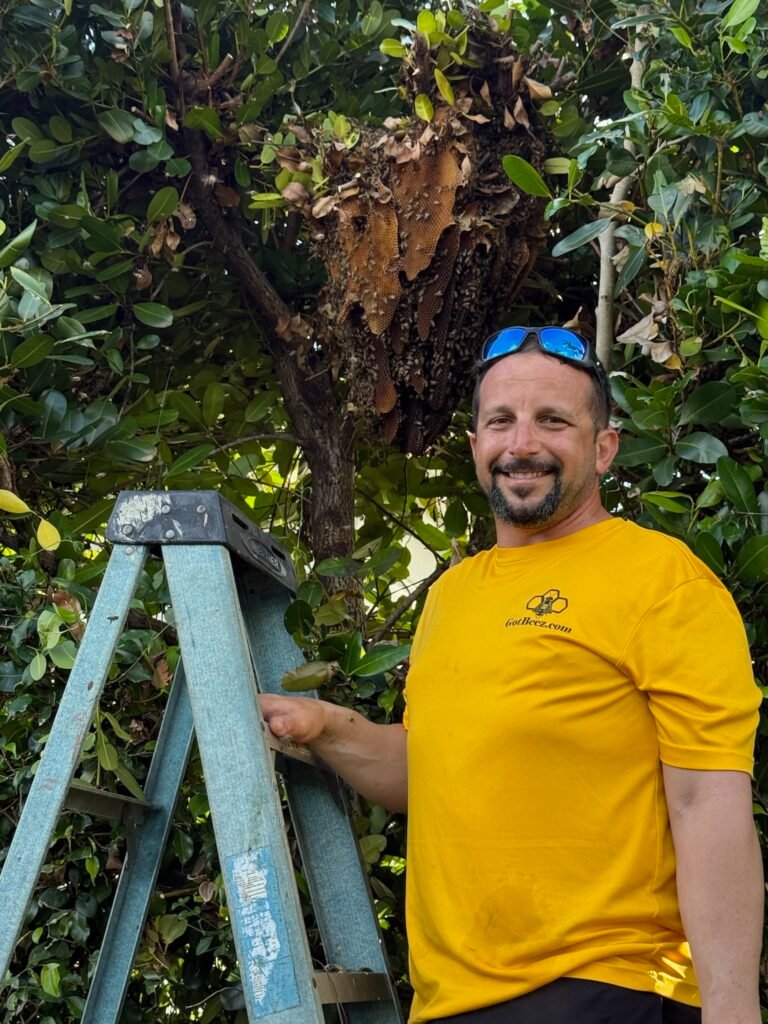
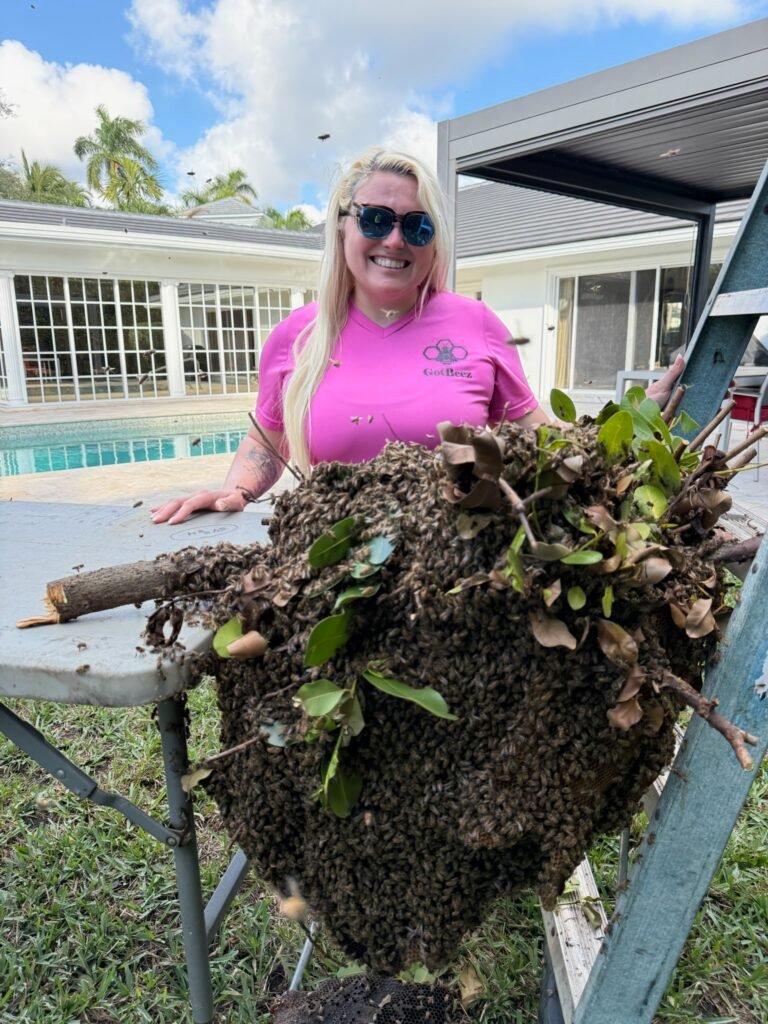
Bee Swarm vs Hive Guide Bee Swarm vs. Established Hive — What’s the Difference & What Should You Do? The difference between a swarm and an established hive changes the urgency, removal process, cost, and risk level. A fresh swarm is usually a temporary cluster of traveling bees. An established hive means the colony has already moved into a structure and started building comb. In South Florida, a swarm can become a structural hive in as little as 24–72 hours. Broward: 954-546-0220 Palm Beach: 561-867-0507 Watch Live Swarm Removals South Florida Swarm & Hive Specialists Humane live swarm capture and full structural hive removals throughout Broward and Palm Beach County. The Short Answer Bee Swarm Established Hive What it is Traveling colony looking for a home Settled colony with comb built Comb present? No Yes How long? Hours to days Weeks to years Aggression Usually calm Defensive Removal difficulty Simple capture Structural removal Typical cost $150–$350 $350–$950+ Urgency Act within 24–48 hours Act immediately What Is a Bee Swarm? A swarm is a traveling cluster of bees in transit. When a colony gets too large, the old queen leaves with roughly half the worker bees to search for a new nesting site. Swarms usually appear as a hanging mass of bees on a tree branch, fence, mailbox, soffit, or exterior surface. Fresh swarms have: No comb No honey stores No brood to defend No permanent home yet That is why swarms are often calmer than established colonies. How Long Do Swarms Stay? Most swarms remain clustered for a few hours to 1–3 days while scout bees search for a permanent cavity. In South Florida, swarm activity peaks from March through May and again during early fall. What Is an Established Hive? An established hive forms once a swarm moves into a cavity and starts building comb. Common locations include: Wall voids Soffits and fascia boards Attics Utility boxes Rooflines Tree hollows Once comb is built and brood is present, the colony becomes defensive and removal becomes a structural job instead of a simple capture. Signs You Have an Established Hive Bees streaming in and out of a crack or hole A steady flight path like an airport runway Buzzing inside walls or ceilings Visible comb or wax Bee activity continuing for days or weeks How to Tell the Difference Quickly It’s Probably a Swarm If: All bees are clumped together in one hanging cluster No comb is visible The cluster appeared suddenly The bees are on an exposed exterior surface The bees are not flying in and out of a hole It’s Probably an Established Hive If: Bees repeatedly enter and exit one opening You hear buzzing inside walls or ceilings You see wax or propolis near an opening The activity has continued for more than a few days The bees become defensive near the area Why Acting Fast Matters Swarms are temporary only until they find a cavity. Once a swarm enters your wall, soffit, or attic, the colony can build significant comb within days. South Florida’s warm climate accelerates colony growth and comb production, which means delays often turn a simple swarm capture into a major structural removal. What To Do If You Have a Swarm Act within 24–48 hours Keep people and pets away Take a photo from a safe distance Text photos to GotBeez for a quick estimate Do not spray or disturb the bees What To Do If You Have an Established Hive Call a licensed beekeeper immediately Note where bees are entering and exiting Do not seal the opening Do not spray pesticides into the cavity Do not ignore the problem The Cost Difference Is Real One of the biggest reasons to act quickly on a swarm is cost savings. A fresh swarm on a tree branch may cost only $150–$350 to remove. That same colony inside a wall two weeks later may become a $350–$950+ structural hive removal with honeycomb cleanup. Early removal prevents: Structural damage Melted honeycomb in walls Secondary pests Expensive repairs Related resources: South Florida Bee Removal Cost Guide Africanized Bees in South Florida Emergency Bee Removal Quick Swarm Warning Signs Large hanging cluster of bees No visible comb Appeared suddenly Usually calm behavior Clustered on a branch, fence, or mailbox Signs of a Structural Hive Bees entering a crack or soffit repeatedly, buzzing in walls, or activity lasting more than a few days usually indicates an established hive. Call GotBeez Broward County: 954-546-0220 Palm Beach County: 561-867-0507 Bee Swarm vs Hive FAQ Is a bee swarm dangerous? Fresh swarms are generally calmer than established hives, but all wild bee clusters in South Florida should be treated carefully since Africanized bees cannot be identified visually. How long will a swarm stay before moving on? Most swarms stay in one place for a few hours to 1–3 days while searching for a permanent nesting cavity. Can I remove a bee swarm myself? Professional removal is the safest option in South Florida because most feral colonies are assumed to contain Africanized genetics. How do I know if bees moved into my wall? Listen for buzzing inside walls and look for bees repeatedly entering and exiting a small opening over several days. Will bees leave on their own once they move into a wall? No. Once comb and brood are established, the colony is committed to that location and requires professional removal. Does GotBeez remove both swarms and established hives? Yes. GotBeez handles both simple swarm captures and full structural hive removals throughout Broward and Palm Beach County.
Africanized Bees in South Florida
Africanized Bee Safety Guide Africanized Bees in South Florida — How to Identify Them & What To Do Most feral bee colonies in Broward and Palm Beach County are assumed to be Africanized. Learn the warning signs, what makes them different, and how to stay safe. You cannot visually identify Africanized bees. The only confirmed identification method is laboratory testing through Florida’s FABIS system. If you encounter an aggressive bee colony in South Florida, treat it as potentially Africanized and call a professional beekeeper immediately. Broward: 954-546-0220 Palm Beach: 561-867-0507 Watch Live Removals Professional Africanized Bee Removal Same-day response for aggressive and Africanized bee colonies throughout Broward and Palm Beach County. What Are Africanized Bees? Africanized honey bees (Apis mellifera scutellata), often called “killer bees,” are a hybrid bee species first created in Brazil during the 1950s. The colonies escaped and spread throughout the Americas, eventually reaching Florida by 2005. Today, Africanized bee genetics are established throughout South Florida. Most wild or feral colonies found in Broward County and Palm Beach County should be treated as potentially Africanized until proven otherwise. Can You Identify Africanized Bees by Looking at Them? No — and this is one of the most dangerous misconceptions homeowners have. Africanized bees are only about 10% smaller than European honey bees and cannot reliably be identified visually, even by experienced beekeepers. The only confirmed identification method is laboratory testing through Florida’s FABIS system. If you see a wild colony in South Florida, never assume it is “safe” simply because it looks calm at the moment. How to Identify Africanized Bees by Behavior Behavior European Honey Bees Africanized Honey Bees Defensive Response 5–10 bees, ~20 feet Hundreds of bees, up to 40 yards Chase Distance Usually under 50 feet Up to a mile or more Provocation Threshold Requires significant disturbance Triggered by sound, vibration, movement Nesting Preference Selective locations Will nest almost anywhere Swarm Frequency Once or twice yearly Much more frequent The biggest warning sign is a colony that aggressively rushes, chases, or attacks with little provocation. Where Africanized Bees Commonly Nest Wall voids and soffits Rooflines and fascia boards Utility meter boxes Irrigation valve boxes Tree hollows and shrubs Hot tub enclosures Storage containers Old tires and debris piles Patios and porch overhangs Their willingness to nest close to humans is one of the biggest risks in HOA communities and residential neighborhoods throughout South Florida. What To Do If You Suspect Africanized Bees Step 1 — Stay Back Keep children, pets, and anyone with bee sting allergies away from the area. Step 2 — Do Not Disturb the Colony Avoid lawn equipment, pressure washers, power tools, pesticides, smoke, or vibration near the hive. Step 3 — If Chased, Run Run in a straight line toward a building or vehicle. Do not swat at bees. Step 4 — Call a Professional Beekeeper Africanized colonies require specialized protective equipment and handling experience. GotBeez provides professional aggressive bee removal throughout: Broward County Bee Removal Palm Beach County Bee Removal How to Get Rid of Bees Safely South Florida Bee Removal Cost Guide Are Africanized Bees More Dangerous? Their venom is not stronger than standard honey bee venom. The danger comes from the sheer number of bees that respond and the distance they will pursue threats. A European colony might send a few bees to investigate. An Africanized colony can mobilize hundreds of bees within seconds. Anyone stung more than 10–15 times or showing allergic reaction symptoms should call 911 immediately. Can Africanized Bees Be Removed Without Killing Them? GotBeez evaluates each situation individually and explains all options before work begins. Preventing Africanized Bee Colonies Seal gaps larger than ¼ inch Remove debris piles and unused containers Inspect soffits and rooflines regularly Check utility boxes and irrigation covers Cap hollow fence posts and cavities Warning Signs Bees aggressively chasing people Buzzing near walls or rooflines Colony near doors or walkways Rapid response to vibration Large outdoor clusters Bees nesting in utility areas Emergency Bee Removal Broward County: 954-546-0220 Palm Beach County: 561-867-0507 Watch Real Removals See live removals, swarm captures, and structural hive removals on our YouTube channel. youtube.com/@GotBeez Africanized Bee FAQ Are most bees in South Florida Africanized? Most feral or wild colonies found in Broward and Palm Beach County are assumed to contain Africanized genetics. Can you identify Africanized bees visually? No. Laboratory testing is the only reliable identification method. What should I do if bees are chasing me? Run immediately toward a building or vehicle. Do not swat at the bees. Can GotBeez remove Africanized bees? Yes. GotBeez is trained and equipped for aggressive bee removal throughout South Florida. Is it illegal to keep Africanized bees in Florida? Yes. Florida law prohibits knowingly keeping Africanized honey bees. How far can Africanized bees chase you? In some cases, Africanized bees may pursue threats for up to a mile.
Bee Removal Cost
2026 South Florida Price Guide How Much Does Bee Removal Cost in South Florida? Real pricing for swarm removal, wall hives, honeycomb cleanup, commercial bee removal, and live no-kill relocation throughout Broward and Palm Beach County. Transparent Pricing — No Surprise Invoices Bee removal in South Florida typically costs between $150 and $1,500+, with most residential jobs falling in the $250–$800 range depending on access, hive size, and whether honeycomb removal is needed. GotBeez provides photo-based estimates before arrival so homeowners and property managers know what to expect. Call Broward: 954-546-0220 Call Palm Beach: 561-867-0507 Watch Live Removals Serving Broward & Palm Beach County Live no-kill bee removal, honeycomb cleanup, swarm removal, wall hive removal, and commercial bee relocation. What Affects Bee Removal Cost the Most? Three things move the price more than anything else: where the bees are located, how large the colony is, and whether honeycomb needs to be removed. 1. Where the Bees Are Located Easy-access swarms hanging from a tree or fence are the least expensive jobs. Hidden hives inside walls, soffits, rooflines, utility meter boxes, hot tub enclosures, or between floors of a building require more labor, access work, and cleanup. 2. How Big the Colony Is A fresh swarm that landed yesterday may have no comb and only a few thousand bees. An established colony inside a wall can contain tens of thousands of bees, heavy honeycomb, brood, and multiple pounds of honey. 3. Whether Honeycomb Needs To Be Removed Leaving comb behind is the single biggest mistake South Florida homeowners make. In Florida heat, abandoned comb melts, ferments, attracts ants, roaches, rodents, and future swarms — while causing odors and stains that soak into drywall for years. Bee Removal Cost by Job Type Job Type Typical Cost Range Swarm removal — exterior, easy access $150 – $350 Hive in a tree, shed, or open structure $250 – $500 Hive in a fence, water meter, or utility box $200 – $450 Wall, soffit, or roofline removal $350 – $950 Hot tub enclosure or storage container hive $300 – $700 High-reach removal Add $150 – $400+ Hive between floors or in an attic $800 – $1,500+ Honeycomb cleanup and cavity cleaning Included or $100 – $300 extra Commercial or HOA property removal Custom quote Every bee job is different. GotBeez provides free photo-based estimates for most situations before a beekeeper arrives. Swarm Removal vs. Established Hive — Why It Matters Fresh Swarms Are Usually the Least Expensive A swarm is a traveling cluster of bees searching for a new home. They have no comb, no brood, and no investment in the location yet. If you call within the first 24–72 hours, a beekeeper can often box the entire swarm quickly and cleanly. Established Hives Cost More for Good Reason Once bees have been inside a wall void, soffit, fascia, roofline, or tree cavity for weeks or months, they have built comb, stored honey, and established brood. Safe removal means opening the structure, removing bees, cutting out comb, cleaning residue, and preparing the cavity correctly. Why Live No-Kill Removal Costs More Than Extermination Some pest control companies spray and seal bee colonies without removing honeycomb. That approach may seem cheaper upfront, but it almost always creates larger costs later. Dead bees decompose and attract secondary pests Honeycomb melts in South Florida heat and stains drywall Fermented honey creates odor and mold problems The old hive scent attracts future swarms back to the same spot Drywall and wood repairs become more expensive later GotBeez focuses on live no-kill bee removal. Colonies are captured alive, honeycomb is removed, and the bees are relocated to managed apiaries throughout South Florida. Does Bee Removal Cost More in South Florida? In many cases, yes. South Florida pricing is affected by a few unique local factors. Africanized bee risk: aggressive colonies require more safety equipment and careful handling. Year-round swarm season: unlike northern states, bee activity in South Florida stays active almost all year. Florida heat accelerates comb damage: abandoned comb deteriorates quickly in attics, walls, soffits, and rooflines. What’s Usually Included in a GotBeez Removal? Free photo-based estimate before arrival On-site inspection and safety assessment Live bee capture and boxing Honeycomb removal and cavity cleaning when accessible Relocation to a managed South Florida apiary Structural entry-point identification Documentation and invoices for HOAs or property managers Honeycomb Removal Cost — Do Not Skip This If bees are removed but the comb is left behind, this is what usually happens within 30–90 days in South Florida: Comb melts into insulation and drywall from attic heat Fermented honey odor spreads through walls and vents Ants, roaches, wax moths, and rodents move in The old comb scent attracts a new swarm back to the same cavity Always ask: “Will you remove the honeycomb too?” GotBeez includes comb removal as part of standard structural jobs whenever the cavity is accessible. Commercial and HOA Bee Removal Pricing Commercial bee removal jobs for restaurants, HOA communities, retail centers, office buildings, warehouses, schools, and government properties are quoted individually because access, timeline, liability, and colony size vary significantly. GotBeez regularly works with HOAs, property managers, commercial landlords, restaurants, dealerships, and municipal properties throughout Broward and Palm Beach County. How To Get an Accurate Estimate Before You Call The fastest way to get an accurate price range is to text two or three photos of the bee situation to 954-546-0220. A wide shot showing where the bees are located A closer photo showing the entry point or cluster size A quick note on how long the bees have been there You can also view real removals and structural hive jobs on the GotBeez YouTube channel. Typical Price Drivers Hive inside wall or roofline Large established colony Honeycomb cleanup required Lift or ladder access needed Commercial or HOA coordination After-hours emergency response Need a Fast Estimate? Text photos of the bees directly to: 954-546-0220 South Florida Service Areas Broward County Bee Removal Palm Beach County Bee Removal West Palm Beach
Emergency Bee Removal in South Florida
24/7 Emergency Bee Removal Emergency Bee Removal in South Florida — What To Do Right Now Same-day live bee removal and no-kill bee rescue throughout Broward County and Palm Beach County. Need Bees Gone Now? Start Here. If you are looking at a swarm or hive and searching “emergency bee removal near me,” you do not have time to read three other websites and compare. GotBeez provides same-day, humane emergency bee removal across Broward and Palm Beach County, with experienced beekeepers who relocate bees instead of exterminating them. Call or text now: Broward County: 954-546-0220 Palm Beach County: 561-867-0507 Broward Emergency Line Palm Beach Emergency Line Watch Live Removals 24/7 Live No-Kill Bee Rescue GotBeez responds to emergency bee situations throughout Broward County and Palm Beach County with humane live bee removal and relocation. When Is Bee Removal an Emergency? Not every bee sighting is a 911 situation, but some bee problems need fast professional help. If bees are aggressive, located near people or pets, or entering structural areas of a home or business, you should treat the situation as urgent. Aggressive Behavior Bees rushing, bumping, following, or stinging with little provocation can signal a defensive or Africanized colony. High-Traffic Locations Hives near front doors, walkways, playgrounds, pools, mailboxes, parking lots, or business entrances should be handled quickly. Confined Spaces Bees inside walls, soffits, rooflines, fascia boards, utility meter boxes, or attic areas can grow into larger structural problems. Sensitive People or Pets Nearby Known bee sting allergies, young children, elderly family members, or pets that cannot easily be kept away make the situation more urgent. If any of these apply, call for professional help and do not try to spray, hit, flood, seal, or knock down the hive yourself. What To Do and Not Do While You Wait Do This First Keep people and pets away from the hive or swarm. Close doors, gates, and windows near the bee activity. Stay calm and move slowly around the area. Avoid loud vibration from lawn equipment, power tools, pressure washers, or leaf blowers. Take a quick photo or video from a safe distance to help GotBeez estimate swarm size and access needs. Note the location and height of the colony: ground level, fence, tree, wall, roofline, soffit, or utility meter. Do Not Do This Do not spray store-bought pesticides or soap mixtures. Do not throw objects, hit the hive, or blast bees with a hose. Do not try to smoke bees out of a wall, roofline, soffit, or attic. Do not seal an active entry hole while bees are still inside. Many emergency bee calls become more complicated because someone sprayed or sealed a hive before the colony was removed. This can push bees deeper into the structure and leave behind honeycomb that attracts pests, causes odors, and brings future swarms back to the same location. Why Live Emergency Bee Removal Beats Extermination Many homeowners are told to “just spray them and seal the hole.” That may sound simple, but it usually creates bigger problems when bees are inside walls, ceilings, fascia boards, soffits, or rooflines. Hidden honeycomb can rot inside walls, causing stains, odors, and structural mess. Dead bees and honey attract pests, including ants, roaches, rodents, and wax moths. Old hive odor attracts new swarms, making the same cavity a target for future colonies. Healthy honey bee colonies are valuable pollinators, especially in South Florida’s landscape and agriculture. GotBeez focuses on live no-kill emergency removal. Colonies are captured, boxed, and relocated to managed apiaries where they can continue working — just not inside your home or business. How Much Does Emergency Bee Removal Cost? Every emergency bee removal job is different. Pricing depends on hive size, height, access, risk level, location, and whether the bees are exposed or inside a structure. Simple swarm removal: roughly $150–$350 for an exterior cluster on a bush, fence, or low tree branch. Standard structural removal: typically $300–$800 for eaves, soffits, fascia, or low roofline access. Complex or high-risk removals: $800+ when high roofs, tight utility spaces, heavy demolition, lifts, or contractor coordination are required. GotBeez provides free photo-based estimates for many emergencies and explains upfront pricing before work starts so you are not surprised. Our 5-Step Emergency Bee Removal Process Step 1 — Immediate Phone Triage You send photos or video and a brief description. A GotBeez beekeeper confirms whether bees are involved, assesses the risk level, and provides an approximate arrival window. Step 2 — On-Site Inspection and Safety Zone On arrival, our team secures the immediate area, confirms the colony location, and checks for sensitive people, pets, utilities, obstacles, or public access concerns nearby. Step 3 — Live Removal and Hive Access Depending on where the bees are located, we safely box a swarm or carefully open the structure, such as a soffit, fascia board, or wall cavity, to access the hive. Bees and comb are removed together so the colony can be relocated. Step 4 — Honeycomb Removal and Cleanup We remove accessible honeycomb and residue from the cavity, reducing odors that attract future swarms. When needed, we coordinate with or refer licensed contractors for repairs. Step 5 — Relocation to an Apiary The live colony is transported to a managed apiary or partnering beekeeper location in South Florida, where the bees are given a new hive away from your home. Emergency Bee Removal Throughout Broward and Palm Beach County GotBeez provides emergency live bee removal for homes, HOAs, property managers, commercial buildings, restaurants, schools, parks, and businesses throughout South Florida. Broward County Bee Removal Palm Beach County Bee Removal Fort Lauderdale Bee Removal West Palm Beach Bee Removal Jupiter Bee Removal Palm Beach Gardens Bee Removal Singer Island Bee Removal Emergency Warning Signs Bees chasing, bumping, or stinging Hive near doors, walkways, pools, or parking lots Buzzing inside walls, ceilings, soffits, or rooflines Visible honeycomb or staining Children, pets, or allergy risks nearby Bees entering a utility meter or enclosed cavity 24/7 Emergency Lines Broward County: 954-546-0220 Palm
How to Get Rid of Bees Safely in South Florida
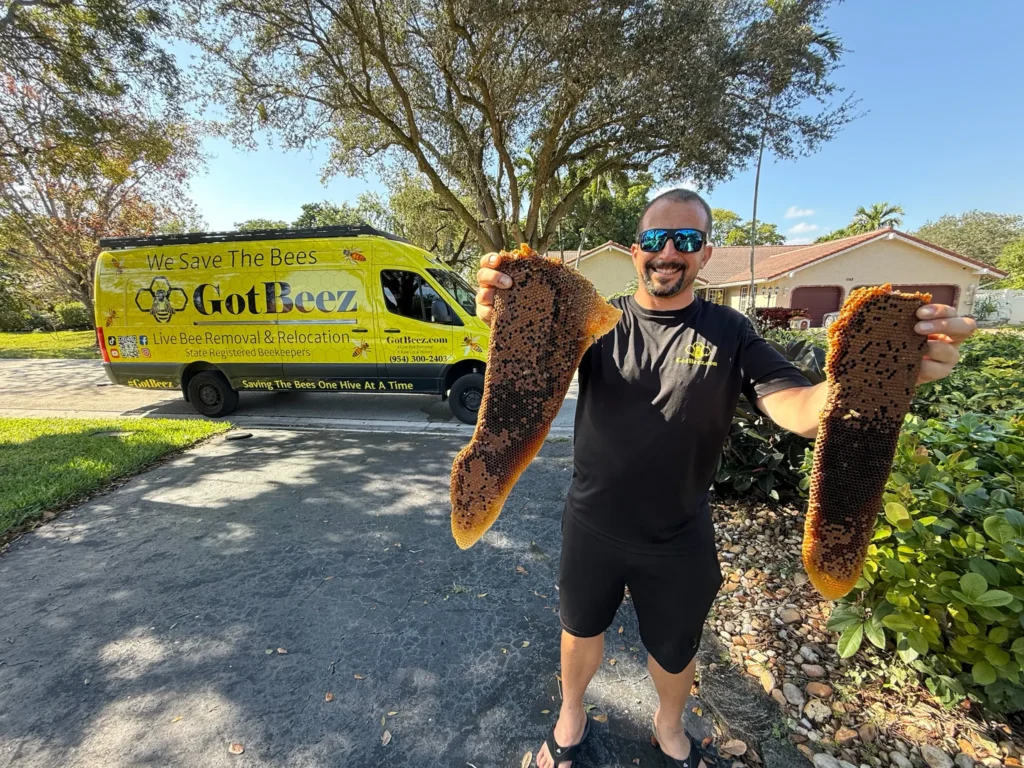
Safe Bee Removal Guide How to Get Rid of Bees Safely in South Florida Without Killing Them Learn what to do, what not to do, when DIY bee removal is dangerous, and why professional live bee removal is the safest long-term solution. Quick Answer The safest way to get rid of bees in South Florida is to call a professional live bee removal specialist, especially if bees are inside walls, roofs, fascia, soffits, sheds, or other structures. Sprays, sealing holes, smoke, and DIY remedies can make bees defensive, leave honeycomb behind, and create bigger property problems. Palm Beach: 561-867-0507 Broward: 954-546-0220 Watch Live Removals Humane Bee Removal & Relocation GotBeez removes live bee colonies from South Florida homes and relocates them to our local apiary, every time. How to Get Rid of Bees Safely in South Florida If you are searching for how to get rid of bees around your home, you are not alone. Many homeowners in South Florida deal with bees in walls, roofs, soffits, fascia boards, trees, sheds, and yard structures every year. Most homeowners want a solution that protects their family, avoids unnecessary property damage, and is humane for the bees. That is why professional live bee removal and relocation is the best long-term approach when bees have built an established hive inside or around a structure. At GotBeez, we specialize in live bee removal and relocation throughout Palm Beach County and Broward County. Instead of killing the bees, we carefully remove the colony and relocate it to our local apiary, every time. Before You Try to “Get Rid of Bees” Yourself Many DIY articles suggest sprays, smoke, essential oils, soap and water, cinnamon, citrus, or other home remedies to drive bees away. These methods may sometimes move small numbers of foraging bees, but they are unreliable for an established hive. Important Safety Warning If you see bees coming and going from a single hole, wall gap, roofline opening, soffit, or fascia board for several days, you are likely dealing with an active hive, not just a few stray bees. When bees are nesting inside a structure, DIY sprays and repellents can make the colony more defensive, increasing the risk of stings. They can also push bees deeper into the structure or leave behind honey, comb, brood, and dead bees that create odor, staining, and pest problems. The Safest Way to Get Rid of Bees: Call a Live Bee Removal Specialist For structural hives in walls, fascia, soffits, roofs, sheds, and similar areas, the safest and most effective way to get rid of bees is professional live bee removal. Humane bee removal focuses on fully removing the colony instead of simply spraying the visible bees. The goal is to protect your home, prevent future infestations, and preserve healthy pollinators. Access the Hive Safely A trained bee removal specialist can open the affected area carefully without causing unnecessary structural damage. Remove Bees and Comb Removing the honeycomb is critical because leftover comb and honey can attract new swarms and secondary pests. Find the Queen Securing the queen helps keep the colony together and improves the success of live bee relocation. Prevent Bees From Returning Cleaning, deodorizing, and sealing the entry point helps reduce the chance of future bee activity. How GotBeez Handles Live Bee Removal Here is how we typically handle a live bee removal call in Palm Beach County or Broward County: Inspect the property to confirm bee activity and locate the hive. Carefully open the affected area, such as fascia boards, soffits, or wall cavities. Gently remove comb and bees using professional tools and protective gear. Find and secure the queen so the colony can be successfully relocated. Transport the bees to our local apiary where they can continue to thrive. Clean up residual comb and honey and advise on repairs or sealing. Our goal is simple: get the bees out of your home safely and keep them alive as part of managed hives, every time. What Not to Do When Trying to Get Rid of Bees To protect yourself, your family, your property, and the bees, avoid these common mistakes: Do not spray random chemicals or wasp killers into walls or roofs. This can drive bees deeper into the structure and leave behind honey, comb, and dead bees. Do not block or seal entry holes while the hive is active. Trapping bees inside can force them into living spaces or create a larger mess. Do not burn, flood, or aggressively smoke a structural hive. These methods are dangerous and may fail to remove comb and brood. Do not get close if anyone nearby has a bee allergy. Bee sting reactions can be serious and may require emergency medical attention. When in doubt, keep people and pets away from the area and call a professional live bee removal company. Are There Any Safe DIY Options to Get Rid of Bees? For small numbers of bees outdoors, and only when there is no hive, some simple steps may help reduce bee activity: Remove or cover attractants such as sugary drinks, open food, pet food, and unsealed trash. Keep outdoor garbage areas clean and tightly closed. Move people and pets away from the area. Wait 24 to 48 hours to see if a small swarm moves on by itself. However, once bees begin building comb or you see steady traffic going in and out of one hole or cavity, DIY methods become less effective and more risky. At that point, professional removal is the safest option. How to Tell When You Should Call a Professional You should contact a live bee removal company like GotBeez if: Bees have been coming and going from the same spot for several days or longer. You hear buzzing in walls, ceilings, soffits, or rooflines. You see comb, honey, or bees inside the structure. The hive is high, hard to reach, or near children, pets, or public areas. Anyone in the household has a history of allergic reactions to stings. You