
Bee Swarm vs. Established Hive — What's the Difference & What Should You Do?
The difference between a swarm and an established hive changes the urgency, removal process, cost, and risk level.
A fresh swarm is usually a temporary cluster of traveling bees. An established hive means the colony has already moved into a structure and started building comb.
In South Florida, a swarm can become a structural hive in as little as 24–72 hours.
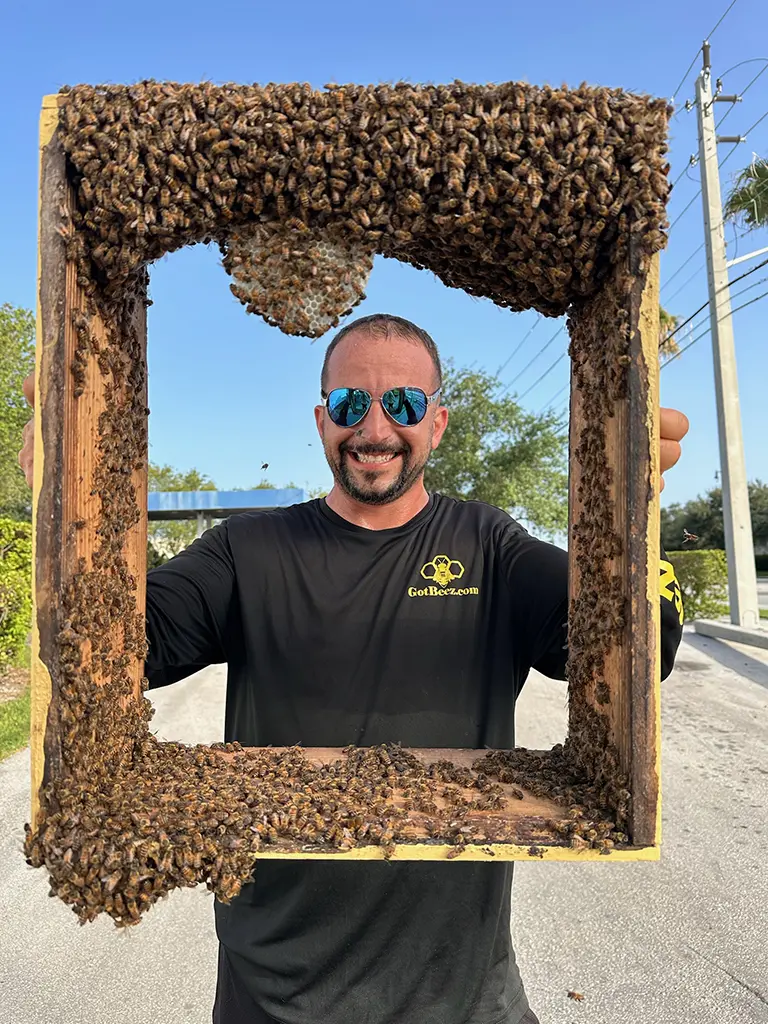
The Short Answer
| Bee Swarm | Established Hive | |
|---|---|---|
| What it is | Traveling colony looking for a home | Settled colony with comb built |
| Comb present? | No | Yes |
| How long? | Hours to days | Weeks to years |
| Aggression | Usually calm | Defensive |
| Removal difficulty | Simple capture | Structural removal |
| Typical cost | $150–$350 | $350–$950+ |
| Urgency | Act within 24–48 hours | Act immediately |
What Is a Bee Swarm?
A swarm is a traveling cluster of bees in transit. When a colony gets too large, the old queen leaves with roughly half the worker bees to search for a new nesting site.
Swarms usually appear as a hanging mass of bees on a tree branch, fence, mailbox, soffit, or exterior surface.
Fresh swarms have:
- No comb
- No honey stores
- No brood to defend
- No permanent home yet
That is why swarms are often calmer than established colonies.
How Long Do Swarms Stay?
Most swarms remain clustered for a few hours to 1–3 days while scout bees search for a permanent cavity.
In South Florida, swarm activity peaks from March through May and again during early fall.
What Is an Established Hive?
An established hive forms once a swarm moves into a cavity and starts building comb.
Common locations include:
- Wall voids
- Soffits and fascia boards
- Attics
- Utility boxes
- Rooflines
- Tree hollows
Once comb is built and brood is present, the colony becomes defensive and removal becomes a structural job instead of a simple capture.
Signs You Have an Established Hive
- Bees streaming in and out of a crack or hole
- A steady flight path like an airport runway
- Buzzing inside walls or ceilings
- Visible comb or wax
- Bee activity continuing for days or weeks
How to Tell the Difference Quickly
It's Probably a Swarm If:
- All bees are clumped together in one hanging cluster
- No comb is visible
- The cluster appeared suddenly
- The bees are on an exposed exterior surface
- The bees are not flying in and out of a hole
It's Probably an Established Hive If:
- Bees repeatedly enter and exit one opening
- You hear buzzing inside walls or ceilings
- You see wax or propolis near an opening
- The activity has continued for more than a few days
- The bees become defensive near the area
Why Acting Fast Matters
Swarms are temporary only until they find a cavity.
Once a swarm enters your wall, soffit, or attic, the colony can build significant comb within days.
South Florida’s warm climate accelerates colony growth and comb production, which means delays often turn a simple swarm capture into a major structural removal.
What To Do If You Have a Swarm
- Act within 24–48 hours
- Keep people and pets away
- Take a photo from a safe distance
- Text photos to GotBeez for a quick estimate
- Do not spray or disturb the bees
What To Do If You Have an Established Hive
- Call a licensed beekeeper immediately
- Note where bees are entering and exiting
- Do not seal the opening
- Do not spray pesticides into the cavity
- Do not ignore the problem
The Cost Difference Is Real
One of the biggest reasons to act quickly on a swarm is cost savings.
A fresh swarm on a tree branch may cost only $150–$350 to remove.
That same colony inside a wall two weeks later may become a $350–$950+ structural hive removal with honeycomb cleanup.
Early removal prevents:
- Structural damage
- Melted honeycomb in walls
- Secondary pests
- Expensive repairs
Related resources:
Bee Swarm vs Hive FAQ
Is a bee swarm dangerous?
Fresh swarms are generally calmer than established hives, but all wild bee clusters in South Florida should be treated carefully since Africanized bees cannot be identified visually.
How long will a swarm stay before moving on?
Most swarms stay in one place for a few hours to 1–3 days while searching for a permanent nesting cavity.
Can I remove a bee swarm myself?
Professional removal is the safest option in South Florida because most feral colonies are assumed to contain Africanized genetics.
How do I know if bees moved into my wall?
Listen for buzzing inside walls and look for bees repeatedly entering and exiting a small opening over several days.
Will bees leave on their own once they move into a wall?
No. Once comb and brood are established, the colony is committed to that location and requires professional removal.
Does GotBeez remove both swarms and established hives?
Yes. GotBeez handles both simple swarm captures and full structural hive removals throughout Broward and Palm Beach County.